Importing a car or any other motor vehicle

Site updated regularly - Page last updated February 2013

Importing a motor vehicle

Many people have successfully imported vehicles of all shapes and sizes into the UK. If you think that this could also be for you, then by using some of the information below, you could find that there are numerous procedures available, which could save even more money. ukimports.org

WARNING!

Alongside genuine reputable companies, there are some companies that offer car shipping services who claim that they can import your vehicle and save you money on: shipping costs and Import Duty & VAT. Some of these methods are classed as fraud, and if caught, come with severe penalties, contact our experienced Imports Team for the correct procedures for importing vehicles. ukimports.org

..................................................................

VAT registered trader/company or Private Import?

Being VAT registered makes a big difference when importing goods into the UK in general, by enabling VAT paid to be reclaimed. This is the same when importing a motor vehicle. There is also one other difference, which relates registering your vehicle with the DVLA.

Vehicles that are imported for Private / Personal use can only be imported with the Customs Form C384. This form carries a disclaimer stating: "... the vehicle is being imported for my personal use and not for resale by way of trade."
Any vehicles imported for resale, solely to make a profit, must be imported under a full VAT number, or under a pseudo TURN.

As mentioned above, for a Private Importer to register a vehicle, they will require a C386 from Customs. This document is proof that Customs are satisfied that any Import Duty and / or VAT has been paid. A Private Importer will NOT be able to register a vehicle for road-use without it.

VAT registered importers (or ones with a pseudo TURN), can complete a self-certified C389. ukimports.org

back to top 


The vehicle was manufactured in the EC

Goods manufactured in the EC, returning back to the EC are generally exempt from Import Duty, However, depending on the circumstances surrounding the vehicle's departure from the EC, you may not qualify for this when importing your car.

Although its generally regarded as common knowledge that Ferrari, for example, is Italian. And that Rolls Royce, is designed and built in Great Britain. Most people, including Customs, know this, and know that other makes are built in other European Countries. In fact, there's just too many to mention here.

Well, true as it may be, motor vehicles that were manufactured in the EC can only qualify for Return Goods Relief, if the importer has obtained evidence that the vehicle being imported was manufactured for the European market.
Vehicles manufactured for the export market (outside of the EC) are classified as 'New goods to the EC' and therefore must have Customs duty and / or VAT paid in full (unless other circumstances apply).

- Export evidence:

As far as UK Customs are concerned, if you are claiming relief from any import duty or VAT, then its down to you, the importer, to provide documentary evidence to show that the goods were exported from the EC.

The type of document that they are usually after is usually one of the following:

Copy export entry
Export invoice
Export Bill of Lading/Airway Bill

If none of these are available from the vehicles manufacturer, you might want to try and obtain a letter or fax (on company headed paper), from them, declaring that all the parts for your particular vehicle, were both manufactured and assembled in the EC.

Unfortunately failure to provide this documentary evidence means that your vehicle will be liable to the full rate of import duty and / or VAT. ukimports.org

back to top 


Pick-up Trucks - Is it a commercial vehicle?

Nowadays it is not unusual for people to purchase pick-up trucks or vans for their own personal use, as opposed to commercial use.

However, due to the fact that these vehicles have the capability to be used for commercial use means that UK Customs classifies these under separate parts in their tariff, as follows:

1. 8704 "Motor vehicles for the transport of goods"
2. 8703 "Motor cars and other motor vehicles principally designed for the transport of persons (other than those of heading 8702), including station wagons and racing car"

So, which one is yours going to be classified as?

Pick up Trucks:

(Tariff Notice 06/07)

Pick up trucks are generally classified under 8704 - Motor Vehicles for the transport of goods, which carries a Customs duty rate of 22%.

However, because Customs acknowledge that more and more pick up trucks are being imported by Private Individuals (C88 box 8 = PR), they have therefore issued this Notice to allow any pick up trucks where the inner length at the floor of the area for transport of goods is no more than 50% of the length of the wheelbase of the vehicles, to be classified under 8703 - Motor cars and other motor vehicles principally designed for the transport of persons (other than those of heading 8702), including station wagons and racing cars, which carries a Customs duty rate of 10%.

For Pick up trucks to qualify for classification under 8703, proof must be provided by way of a copy of the vehicle specification sheet, showing clear measurements.

Click here to see an example of a specification sheet. ukimports.org

Please note: Regardless of load space, vehicles with two or more rear axles will be classified under 8704. ukimports.org

back to top 


Motor vehicles of Historical Interest

UK Customs has acknowledged that even motor vehicles can lay claim to being of historical interest. However, as you would expect, the criteria to qualify for this, are quite clear.

Any motor vehicle manufactured before 1950 is eligible for import duty relief and a reduced rate of VAT. Now, if your vehicle is newer, it doesn't necessarily mean your vehicle cannot obtain these same low rates. But, you have to write to Customs to apply for a BTI (Binding Tariff Information), explaining your reasons. Perhaps its rare, or may have been owned by a famous person, or won a famous race etc.

Customs has issued a Public Notice, from which the text below is taken:

Motor Vehicles of Historical Interest:

(Tariff Notice 05/2005)

Please note: The Revenue and Customs classification category is not the same as the DVLA historic vehicle taxation class, which includes any vehicle constructed before 1 January 1973

"Certain criteria has to be met for a motor vehicle to qualify under 9705 'Goods of Historical Interest', which means that vehicles are eligible for exemption from Customs duty and have to pay just 5% VAT. Motor Vehicles manufactured pre-1950 are automatically classified."

Please contact us if you require more information. ukimports.org

back to top 


Temporary Importation of a Motor Vehicle

On the 11th of August 2009, HM Revenue and Customs issued Notice 308, which provided advice on when relief from import duties can be claimed if temporarily importing a motor vehicle, civil aircraft or vessel.

If you want to import your motor vehicle on a temporary basis, you can. And there are various schemes available to you. The most common one for motor vehicles, is one that allows a vehicle to be imported, and used, for a six-month period (although this can be extended), you can use your vehicle on the UK roads, without paying any import duty and / or VAT.

This example, above, is just one of many ways of temporarily importing a motor vehicle. To find out how it would work for your particular circumstances, please contact us. ukimports.org

back to top 


Relief from VAT on Caravans

Motor Vehicles, Trailers and Caravans are generally liable to VAT when imported into the UK. However, Caravans can be VAT free, if it is either:

- more than 7.0 metres long; or

- more than 2.3 metres wide

Note that these measurements exclude towing bars and any similar apparatus used solely for the purpose of attaching the caravan to a vehicle.

To ensure that there is no confusion as to what exactly a Caravan is, HM Revenue and Customs have issued the following definition:

‘any structure designed or adapted for human habitation that is capable of being
moved from one place to another (whether being towed or by being transported on a motor vehicle so designed or adapted).’ (1960 Act) and, if a twin unit caravan
‘is composed of not more than two sections separately constructed and designed to be assembled on site by means of bolts, clamps or other devices’ (1968 Act). ukimports.org

back to top 


Moving to the UK and bringing your motor vehicle with you (from outside the EC)

If you are deciding to make a permanent move to the UK, you can. But once again, you have to fulfil certain criteria to bring your motor vehicle with you without incurring any import duty and / or VAT.

For this you will need to read Customs Form C104a ukimports.org

back to top 


Roll-on, Roll-off (RORO)

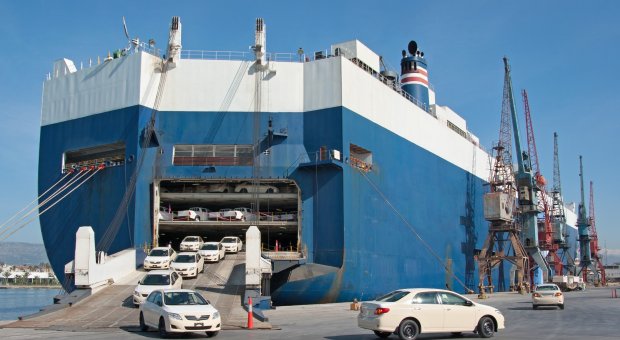
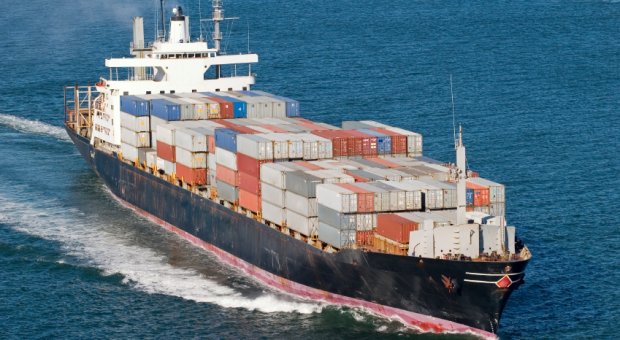
One of the other options available to anyone importing a motor vehicle, is the option NOT to have your vehicle placed in a seafreight container. This could possibly be an option which for whatever reason, could suit you, possibly even a way which could save you money on the shipping costs. Contact our Imports team, if you would like some more information. ukimports.org

back to top 

Registration with the DVLA / SVA

Registering your imported vehicle with the DVLA

The following is taken from the Department for Transport website:

What Customs forms do I need?

The DVLA will only issue UK registration documents on vehicles imported from outside the EU, with one of the following Customs forms:

C&E 386 - This form is issued by HM Customs for a vehicle of any age personally imported from outside the EU. ukimports.org

C&E 388 - This form is issued by HM Customs for a Customs restricted vehicle of any age personally imported from outside the EU. ukimports.org

C&E 389 - This is a self-declaration form which should be used by VAT registered traders for commercial imports from outside the EU. ukimports.org

These forms are either issued by UK Customs or the importer, and will show the DVLA that the appropriate taxes have or will be paid.

For more information on this, please contact us. ukimports.org

back to top 


SVA Test

Once a vehicle is imported, it must pass an SVA test.

The following is taken from the Department for Transport website:

What is the Single Vehicle Approval Scheme?

The Single Vehicle Approval (SVA) scheme is a pre-registration inspection for cars and light goods vehicles that have not been type-approved to British or European standards. The main purpose of the scheme is to ensure that these vehicles have been designed and constructed to modern safety and environmental standards before they can be used on public roads. ukimports.org

Why do we need SVA?

SVA checks that vehicles constructed for non-European Economic Area markets comply with British law. Even vehicles outwardly similar to European-specification models, but intended for other markets, can often be unsuitable for use in Britain without at least some modification. (For further information on importing a vehicle see the Department's leaflet PI5 'How to Import your Vehicle into Great Britain'). SVA recognises certain non-European technical standards as acceptable alternatives to the SVA requirements.

SVA also checks that the construction of amateur-built vehicles, rebuilt vehicles and vehicles using parts from a previously registered vehicle meet modern safety and environmental standards. It also provides an alternative to type approval for vehicles manufactured in very low volume; vehicles converted for the disabled prior to registration, as well as hearses and armoured vehicles for civilian use. ukimports.org

Will SVA affect you?

Generally, your vehicle will need to be approved under the SVA scheme and issued with a Minister's Approval Certificate (MAC) if it is up to 10 years old from the date of manufacture and is not covered by either an EC or national type approval (British or similar national approval from another European Economic Area Member State).

Standard SVA only will be applied to the following:
a left hand drive vehicle
a personally imported vehicle
an amateur built vehicle
a vehicle manufactured in very low volume
a vehicle manufactured using parts of a registered vehicle (for manufacturers only)
a rebuilt vehicle (mandatory if first licensing and registration required)
a motor caravan (optional)
an ambulance (optional)
a hearse
an armoured vehicle

Please contact us if you require more information. ukimports.org

back to top 


Further reading:

The Department for Transport has put together booklet PI5, titled: "How to import your vehicle permanently into Great Britain". This booklet is a guide to the technical requirements that need to be met before vehicles can be registered and licensed for use on roads in Great Britain. ukimports.org

Click here to view the PI5 Booklet, or

Click here for a link to the Department for Transport website
(will be shown in a pop-up window)

back to top 

Email Us